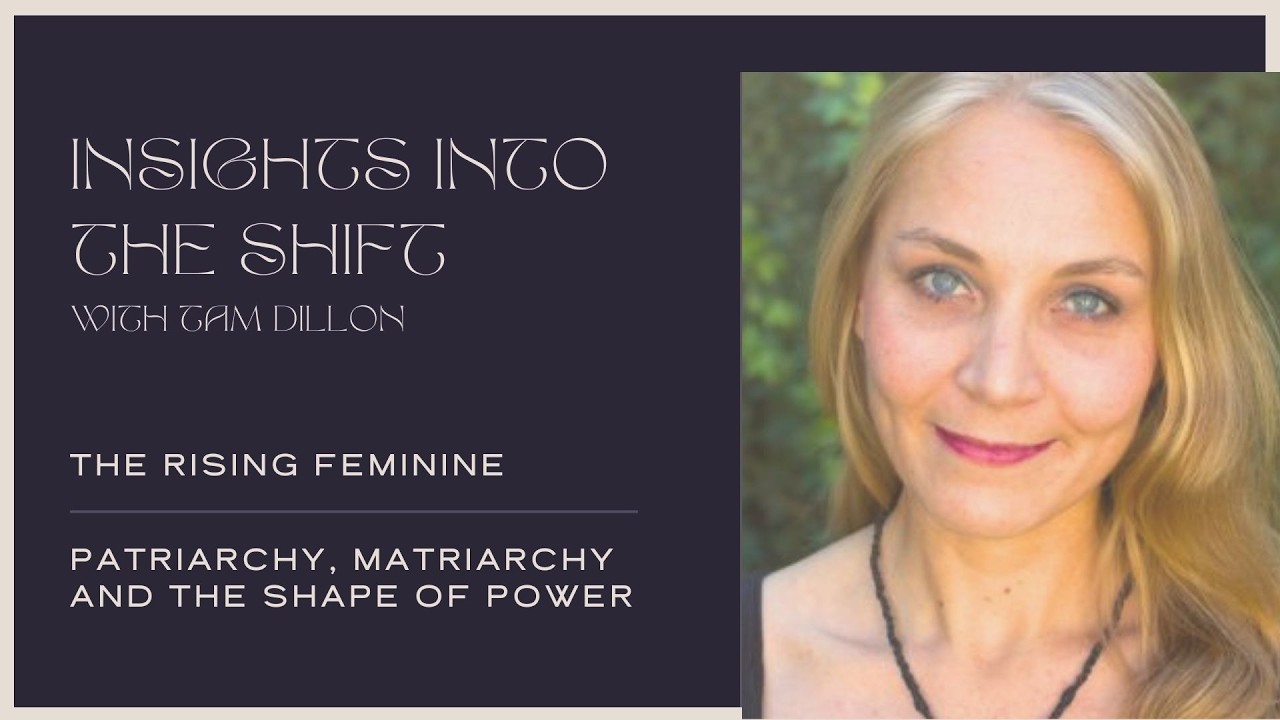
The conversation around the feminine rising is growing, and one of the most important parts of that discussion is understanding how power has been structured in our societies. In this episode, Tam Dillon explores the difference between patriarchal and matriarchal systems and how the structure of power shapes the way societies function.
Most modern societies are built on patriarchal systems where power is organised in a hierarchical, top-down structure. This model often places authority at the top of a pyramid, with decisions flowing downward through layers of leadership. While these systems have built large institutions and economies, they have also contributed to cycles of inequality, conflict and imbalance.
In contrast, many indigenous and ancient cultures organised leadership in more relational ways that were less focused on hierarchy and more focused on maintaining balance within the community. These models often functioned in a more circular structure, where responsibility was shared and leadership was tied to stewardship rather than domination. In this episode we explore how these different structures shape leadership, decision-making and social stability.
Understanding the difference between patriarchal and matriarchal systems helps us see that the systems we live within today are not inevitable. They were created by people and can evolve as societies evolve.
ABOUT THE HOST
Tam Dillon is a mentor, educator and founder of Critical Mass. She works with practitioners, healers and teachers to integrate ancient wisdom with modern systems so their calling becomes a lived, sustainable practice. Her work centres clarity, structure and ethical embodiment in spiritual and healing work.