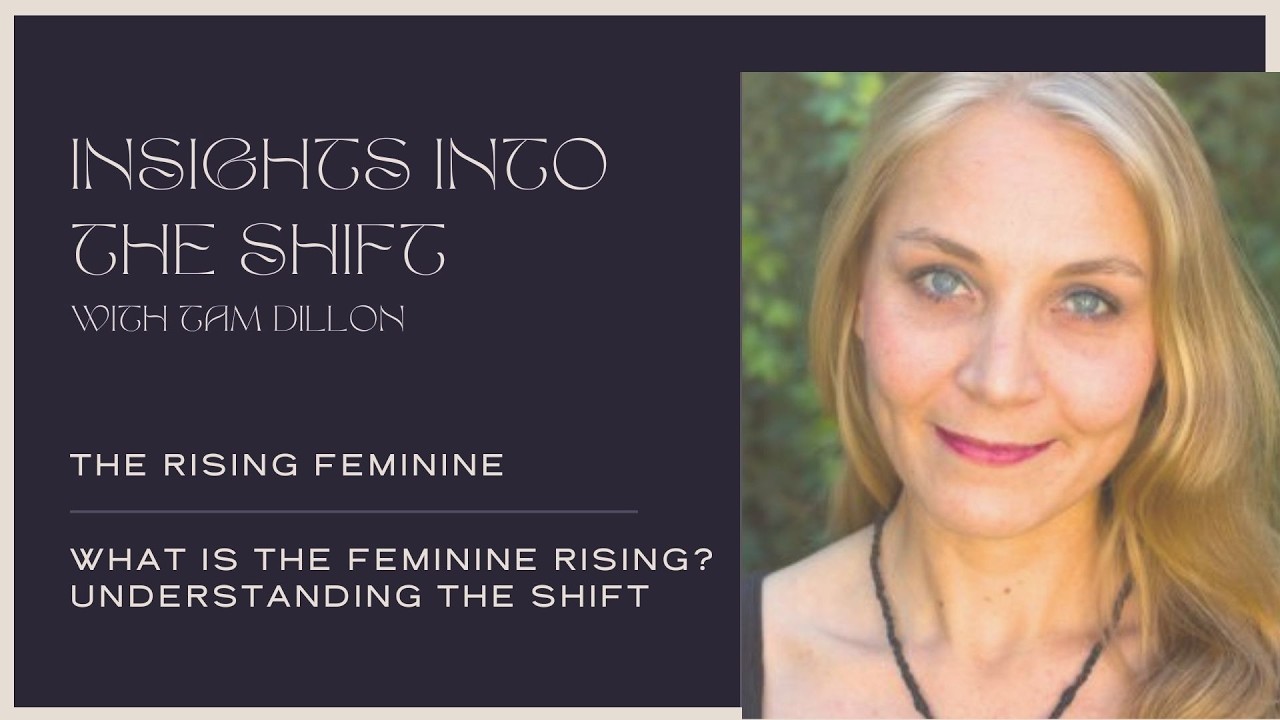
The idea of the feminine rising has become a major topic of conversation across many spaces right now. It’s being discussed in spiritual communities, leadership circles, social movements and cultural commentary. More and more people are sensing that something is shifting in how we think about power, leadership and the values that guide our societies.
For many, the feminine rising is seen as a pivotal part of the broader shift in human consciousness that is unfolding across the world. In this first episode, Tam Dillon begins a series exploring what the feminine rising actually means and why it has become such an important conversation at this moment in time.
While the phrase is often used online and in public discussions, it is also frequently misunderstood. The feminine rising is not about women taking power from men or replacing patriarchy with matriarchy. It is about recognising the imbalance that has shaped many of our systems for centuries and asking how societies might move toward a more balanced way of organising leadership and responsibility.
This episode introduces the foundations of the discussion by exploring the difference between masculine and feminine principles, often described as yin and yang, and how patriarchal systems have historically shaped power, leadership and social structures. It also looks at why feminine qualities such as cooperation, empathy and relational awareness have often been undervalued in societies that prioritise hierarchy, competition and control.
This video sets the stage for the rest of the series, where we will explore how these patterns show up in leadership, relationships, spirituality and the wider structure of society. The goal of the series is not blame or division, but understanding. When we understand the systems we inherited, we create the possibility of building something more balanced for the future.
ABOUT THE HOST
Tam Dillon is a mentor, educator and founder of Critical Mass. She works with practitioners, healers and teachers to integrate ancient wisdom with modern systems so their calling becomes a lived, sustainable practice. Her work centres clarity, structure and ethical embodiment in spiritual and healing work.